Nutrition
Healthy workday lunches without complicated meal prep
Build a practical lunch routine with flexible food choices, simple planning and one manageable habit to explore with wellness coach Damien Fenoli.
The Lifestyle Wellness Project · · 5 min read
What makes a practical, balanced workday lunch?
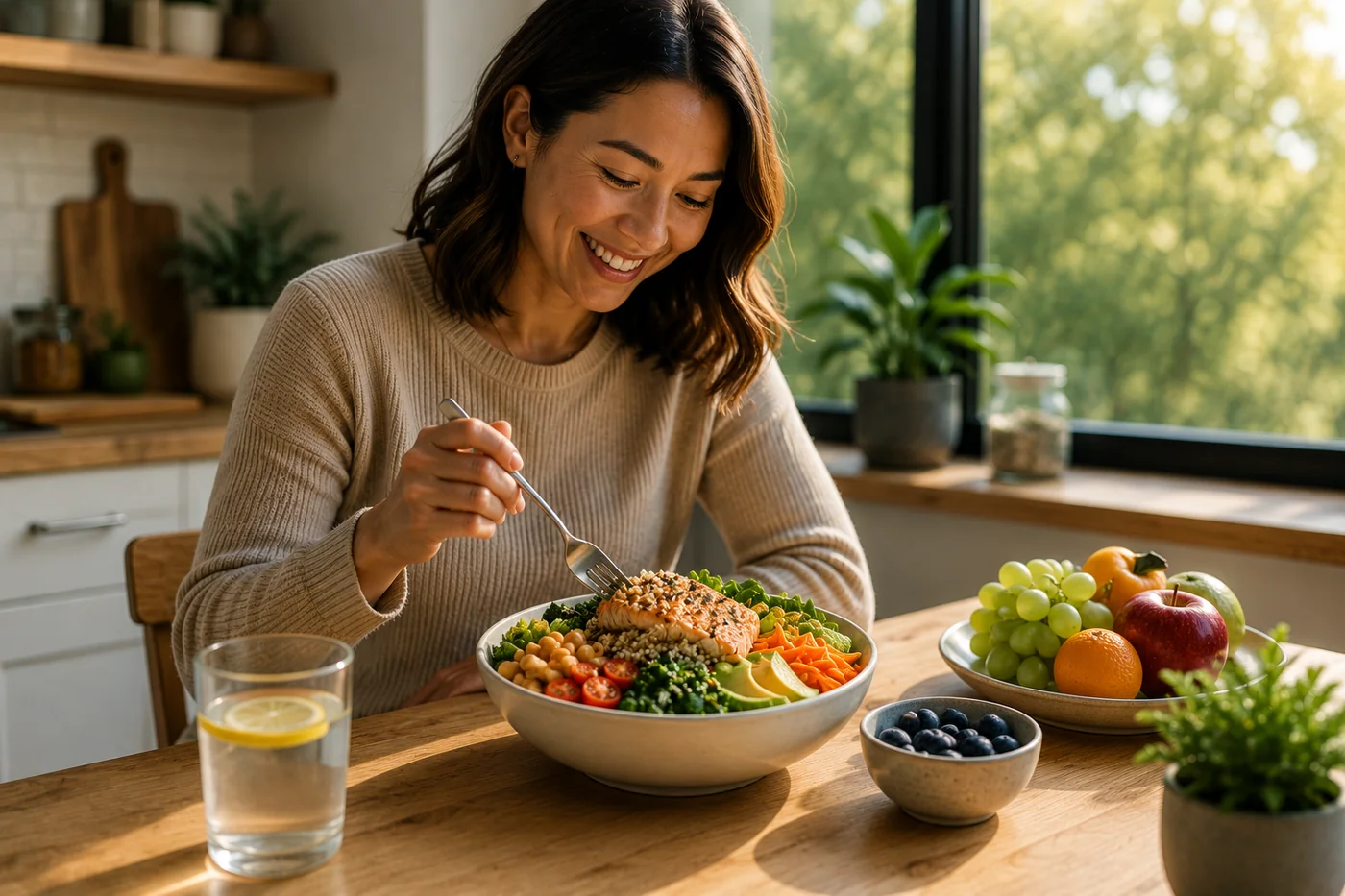
A useful starting point is a lunch that combines vegetables, a wholegrain or other high-fibre grain food, and a protein option you enjoy, such as beans, tofu, eggs or lean meat. Think about variety across your day rather than trying to make one meal perfect. Your budget, culture, appetite, available equipment and health needs all influence what works.
For many people, the harder question is how to make lunch happen on an ordinary working day. This article offers a flexible planning exercise, rather than a prescribed meal plan. Choose one idea that suits your circumstances and see what you learn from trying it.
Do all five food groups have to appear in your lunch?
No. Eat for Health explains that the Australian Guide to Healthy Eating encourages variety from five food groups over the day; every meal does not need to include every group. The groups cover vegetables and legumes, fruit, grain foods, protein foods, and milk products or alternatives. Wholegrain and higher-fibre grain choices feature in the guidance.
That gives you room to build a lunch around familiar foods. Fruit or yoghurt might fit elsewhere in your day. A lunch container does not have to demonstrate the entire guide at once. The suggestions below are examples, not a complete daily eating plan, serving-size advice or a claim that one combination meets every nutritional need.
Which simple lunch combinations could you try?
Try a wholegrain wrap with chickpeas and vegetables you enjoy, or a bowl combining brown rice, tofu and cooked vegetables. Another possibility is a wholegrain sandwich with egg and salad. Adapt ingredients for allergies, dietary requirements and your preferences. You can use these ideas as prompts for choosing foods, without copying a particular recipe.
Look at the components separately: which vegetables would you actually eat, which grain food is convenient, and which protein choice is available? If cooking is difficult, consider options you can assemble. Depending on the product and your circumstances, canned beans, wholegrain bread and ready-to-use vegetables may be useful. There is no requirement to start from scratch.
These are original illustrative combinations, not tested recipes or individual nutrition prescriptions. If you need a therapeutic diet, have food allergies or are unsure what is appropriate for a health condition, ask an accredited practising dietitian or your treating health professional.
How much planning do you really need?
Eat for Health's meal-planning guidance highlights thinking ahead about meals and snacks, with potential benefits for shopping and managing a food budget. You can apply that idea to one lunch rather than planning an entire week. Check what you have, choose a realistic day and note the few items you need.
Before shopping, ask three practical questions: where will I eat, can I keep food cold, and will I have somewhere to heat it? Someone working from home may have different options from a person driving between jobs. A plan that assumes access to a kitchen will not suit everyone.
Try writing one sentence: “On Tuesday, I will bring this lunch, and I will prepare it at this time.” Then consider an alternative for a disrupted morning. That might mean knowing a nearby lunch option that suits you. Buying lunch is not a failure; the exercise is about making a useful choice easier.
What about keeping a packed lunch safe?
Food safety matters when a lunch travels with you. Food Standards Australia New Zealand's transport guidance describes keeping potentially hazardous foods cold at 5°C or below and using suitable insulated containers with ice bricks. It is written for food businesses, but the underlying need to maintain safe food temperatures is also relevant when considering a packed lunch.
Do not assume an ordinary bag, a parked car or a desk will keep perishable food safe. Plan appropriate cold storage during travel and at your destination. Follow product storage instructions and food-safety advice for the ingredients you use. If you cannot maintain safe storage, choose an option suited to the facilities available.
How can you make lunch preparation a manageable habit?
Healthdirect recommends starting with realistic actions and connecting a new habit to an existing routine. Instead of promising to prepare every lunch, you could begin with one workday. Choose a prompt that already happens, such as clearing the evening meal, and decide what action you will try at that point.
For example: after putting the dinner plates away, you might set out the lunch container and check tomorrow's ingredients. This is a planning example, not a recommendation to leave perishable food unrefrigerated. Choose the smallest useful action for your situation.
After trying it, note what helped and what got in the way. Perhaps the food was convenient but the preparation time was awkward, or the meal did not suit your appetite. Use that information to adjust your next attempt. You do not need to turn a lunch experiment into a score of your discipline.
Where can Damien's wellness coaching help?
Damien Fenoli offers group and one-to-one lifestyle and wellness coaching through The Lifestyle Wellness Project. A coaching conversation can help you explore a practical question: what makes a lunch routine difficult in your life, and which change would you like to try? It can create space to reflect on priorities and follow-through, without prescribing a diet.
If you would like support turning an intention into a realistic action, enquire about coaching with Damien. You can also use the Lifestyle Score as an optional reflection tool before a conversation. It is not a nutrition assessment or diagnosis. Your next step might simply be choosing one workday and deciding what would make lunch a little easier.
Sources & further reading
- Eat for Health: The five food groups
- Eat for Health: Meal planning
- Healthdirect Australia: Creating healthy habits
- Food Standards Australia New Zealand: Transporting food safely
This article is general education, not personalised medical advice. Damien's coaching does not provide diagnosis or treatment. Consult an appropriately qualified healthcare professional about medical concerns or significant lifestyle changes.